

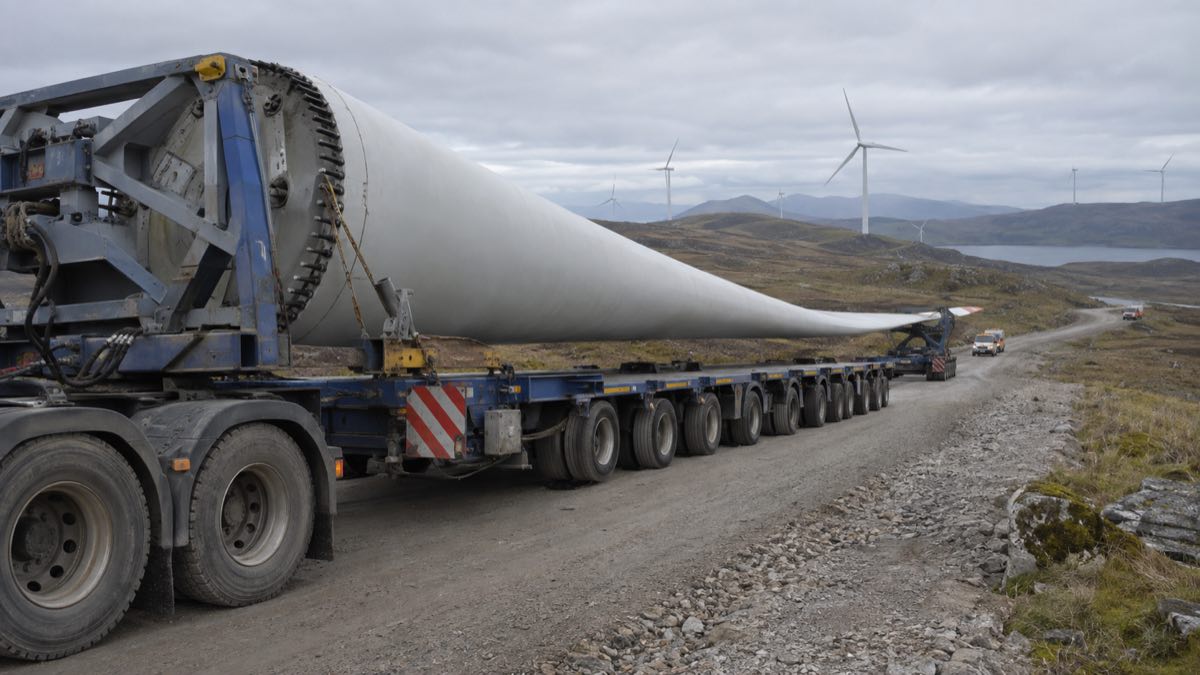
Wind Turbine Blade Transport Tilt and Rollover Monitoring
Vigor configured an inclination monitoring and rollover-warning solution for vehicles transporting large wind turbine components over uneven wind-farm access roads.
WIND TURBINE BLADE TRANSPORT TILT AND ROLLOVER MONITORING
PROJECT BACKGROUND
Wind turbine blades, tower sections and nacelles are exceptionally long or heavy loads. Transport routes to wind farms often include narrow access roads, uneven surfaces, slopes and remote terrain. Because the load has a high center of gravity and limited clearance, excessive vehicle roll or unexpected road inclination can create a serious handling risk.
THE MONITORING REQUIREMENT
The transport team needed continuous information about vehicle attitude and load position. The system had to operate while the vehicle was moving, warn the driver before a project-defined roll limit was exceeded and transmit measurements to an in-cab display without requiring the driver to interpret raw sensor data.
VIGOR SOLUTION
Vigor configured a vehicle inclination and rollover-warning system using rugged tilt sensors installed at selected positions on the transport platform or load-support structure. The sensors measured lateral roll and longitudinal pitch while the vehicle traveled through the wind-farm route.
Measurements were transmitted to a display in the cab. The system could combine angle data with vehicle location and provide visual or audible warnings when the measured inclination approached a configured operating threshold.
SYSTEM CONFIGURATION
- Measurement: vehicle roll and pitch
- Sensor locations: trailer chassis, transport platform or load-support fixture
- Driver interface: in-cab angle display
- Warning function: configurable rollover pre-alarm
- Optional monitoring: vibration and vehicle position
- Communication options: wired or wireless transmission according to vehicle design
- Power and protection selected for mobile outdoor operation
HOW THE SYSTEM WORKED
The system established a level reference before transport. As the vehicle moved, inclination sensors continuously measured changes in chassis and platform attitude. The driver could observe the current angle and receive a warning before reaching the limit defined for the route, vehicle and transported component.
For complex loads, multiple sensors could be used to compare the tractor, trailer and load-support structure. This helped distinguish road-induced vehicle tilt from movement within the transported assembly.
PROJECT VALUE
Real-time inclination data gave the transport team an objective indication of vehicle attitude on uneven roads. Early warning supported lower-speed corrective action before the roll angle became excessive. Recording position and attitude data could also help teams review difficult route sections and improve planning for subsequent component deliveries.
APPLICATION RELEVANCE
This monitoring approach is applicable to wind turbine blade transport, tower-section transport, nacelle transport and other heavy-haul vehicles carrying long or high-center-of-gravity loads. Warning thresholds must be defined by the vehicle engineer, transport plan and route risk assessment. The monitoring system supports driver awareness but does not replace approved transport procedures or safe operating limits.